(RNS) — On the morning of March 24, Sophie Drukman-Feldstein, an American Jew and activist, was arrested and jailed for a simple gesture: Hissing at a flock of Jewish settlers’ sheep to get them to move off a Palestinian family’s land where they had been grazing.
After spending five nights in jail, Drukman-Feldstein was deported and driven across the border to Egypt.
The 28-year-old freelance editor from New York City had participated in a three-month solidarity program run by the U.S.-based Center for Jewish Nonviolence that concluded last month. The program, called Hineinu or “here we are,” brings together Jewish activists from around the world to live side by side with Palestinians as part of a practice called “protective presence.”
This year, for the first time since the program began five years ago, its 14-member cohort faced a series of new obstacles. One person was denied entry to Israel. Two people, including Drukman-Feldstein, were deported and six had their digital entry passes revoked.
“The State of Israel is just increasingly cracking down on any kind of dissenter and anyone trying to document what they’re doing, because they just don’t want witnesses to the ethnic cleansing of the West Bank,” said Drukman-Feldstein, who returned to New York City last week after a short stay in Egypt.
The Israeli government has implemented a practice of arresting and swiftly deporting international activists, often branding them as “anarchists” and “terrorists,” or threats to national security.

Since Jan. 1, 2025, at least 52 international activists have been deported, according to the Human Rights Defenders Fund, a nonprofit legal group that represented them in deportation hearings. Dozens of others have been notified by email that their Electronic Travel Authorizations were revoked, which means they will not be able to reenter Israel once they leave.
The exact number of deportations is not known. Israel’s Population and Immigration Authority did not respond to RNS’ request for comment by the date of publication.
Of those 52 deportations, at least a dozen were U.S. Jews who had volunteered with various nonprofits to accompany Palestinians during last year’s olive harvest or this year’s sheep grazing season.
Among those deported are a group of U.S. Jews who say they are motivated by Jewish values to engage in pro-Palestine activism. Many attended Jewish day schools and summer camps in the U.S. Nearly all have traveled to Israel before and have deep connections there. Some have parents who are rabbis or Jewish educators.
But as a group, they are also sharply critical of Israel’s occupation of the West Bank and Gaza and of what they call the system of apartheid that grants Jews legal supremacy over Palestinians.
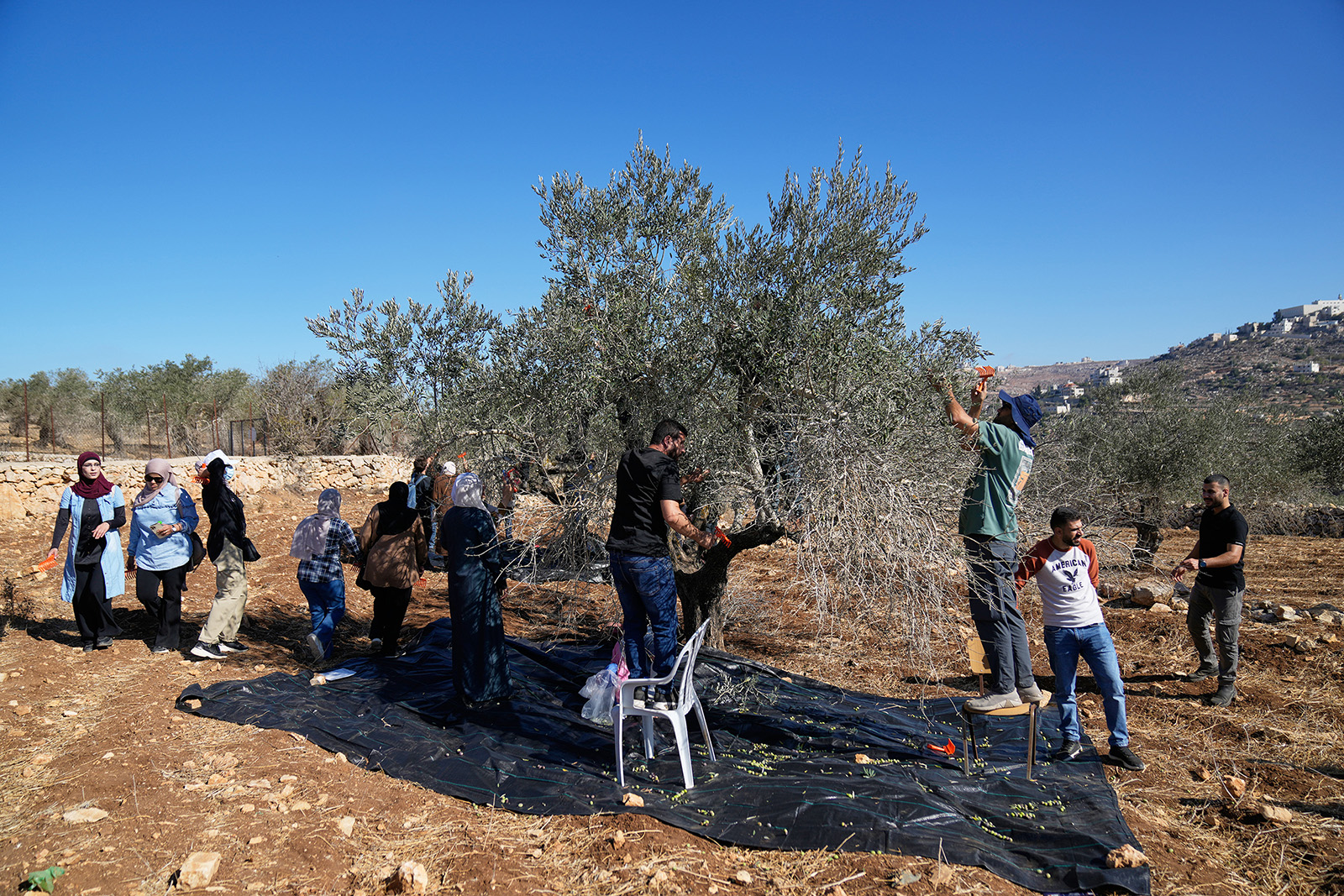
“One of the common factors that I’ve heard from (participants) and felt myself is a need to do something, to show up,” said Daniel Roth, executive director of the Center for Jewish Nonviolence.
RELATED: ‘I was not the right kind of Jew,’ says US Jewish teen deported from Israel
For a while it was thought that Israeli authorities, whether the military or the settlers, would treat Jews from outside Israel with greater deference than Palestinians and therefore they could serve as effective buffers.
“Our presence, which used to bring with it more protection — the idea that settlers or soldiers might hesitate more or be deterred from attacking or carrying out some kind of violent attack — has become less of a sure thing,” Roth said.
The deportation of a second Center for Jewish Nonviolence activist is a case in point. On March 13, the 25-year-old activist, who asked that her name not be used, witnessed a settler hit a 5-year-old Palestinian girl with his car. The activist screamed at the driver to stay put and called for an ambulance. When the ambulance and the police arrived on the scene, the driver demanded the activist be deported. She was.
In the wake of the Oct. 7, 2023, Hamas attack on Israel, settler violence against Palestinians living in the West Bank has spiked, with nearly 1,100 Palestinians killed in the West Bank, according to the United Nations’ humanitarian office. Last year set a record for the most extensive expansion of settlements and planning approvals by government authorities granting settlers permission to grab land belonging to Palestinians.

Drukman-Feldstein has written about sitting alongside Palestinians in “mourning tents,” temporary structures where people gather to be with a bereaved family of a person killed by Israeli settlers or soldiers. The cohort has witnessed dozens of arrests of Palestinians, who are typically forced to kneel and are blindfolded and zip tied as they are arrested.
The Center for Jewish Nonviolence cohort spent much of its three-month stay in Masafer Yatta, a collection of 19 hamlets in the South Hebron Hills that was the subject of the 2024 Oscar-winning documentary, “No Other Land.”
There the activists lived alongside Palestinians, sharing meals and accompanying them on their routines. Some of the hamlets have built guesthouses for the activists, others sleep in families’ houses.
Increasingly, activists say they are being watched by Israeli authorities, their passports scrutinized and photographed during every contact with the police or military.
“My passport and ID had been photographed by Israeli police and IDF soldiers and settlers numerous times and presumably filtered into some kind of (database) or series of databases,” said Sam Sherman, who was part of the three-month Center for Jewish Nonviolence cohort in the West Bank.

Sherman, an actor and playwright who lives in New York City, received an email midway through his stay, informing him that his ETA, or electronic travel authorization, had been revoked.
That revocation is not a deportation order, and it does not mean that the activists had to leave immediately. It does, however, mean Israel will not likely allow people to reenter the country, said Alon Sapir, a lawyer with the Human Rights Defenders Fund.
“For a future visit, they would have to go to the embassy in the U.S. and ask for permission to come to Israel, and it’s very probable that they will not get a visa if the ETA was revoked,” said Sapir.
Those arrested said the police quickly turned them over to immigration authorities for a deportation hearing. In the hearing, the activists said a file on their political views was used as a pretext for their deportations.
“They were asking whether I was affiliated with various organizations, and whether I had attended protests in the U.S., and stuff about my online presence — things that weren’t actually crimes or anything,” said Drukman-Feldstein.

The initial charges for the activists’ arrest are usually dropped.
“They’re being deported for being critical of Israel on social media platforms, or being a part of an organization that is critical of Israel policies in the West Bank,” said Sapir.
The deportation typically bans the activists from Israel for 10 years.
Many of the activists say they weren’t cowed by their expulsions and plan to continue working for justice. Sherman has written a play about his grandfather’s World War II experiences he titled “Kaddish,” using the word of a central hymn praising God. He hopes to stage it in London and Prague.
“I feel it’s my responsibility to try to do this kind of work,” said Sherman, whose travel authorization was revoked. “It really requires me as a U.S. citizen to double-down on trying to advocate for arms embargoes and for boycott and sanctions initiatives that I feel is a real, material way I can try and help my friends — even an ocean away.”
RELATED: Lebanon digs for survivors after Israeli attack kills over 300, as surprise word of talks emerges
Original Source: